
Slippage
In Ethiopia, my preferred method of transportation was a rusty Volkswagen beetle, manufactured in Germany in 1962 and shipped to Addis Ababa shortly thereafter. The last Ethiopian Emperor, Haile Selassie, was enthusiastic about the ‘bugs’ and encouraged their import; tourists now often note the surprising number of the colorful little cars, patched together out of many parts, that can be seen weaving through the frenzied Addis Ababa traffic.

Both for the sake of alliteration and because the name seemed ironically stately, I named the car “Victoria,” and rattled around town racing blue-and-white taxis with my formidable 36 horsepower. Goats and donkeys shied away from Victoria’s bellowing horn, which a former owner had taken from a freight truck and rigged under the hood. Pedestrians often laughed at the contrast between her voice and size.
Victoria kept life interesting. Every month or two a painful screeching noise, a smell of burning rubber, or an ominous clatter would tell me something was wrong. On one occasion, driving off-road up a mountain with my mother and mother-in-law in the back seat, the car skipped the customary warning signs and simply gave up an essential function: steering. I downplayed the crisis to my passengers as the steering wheel turned idly in my hands.
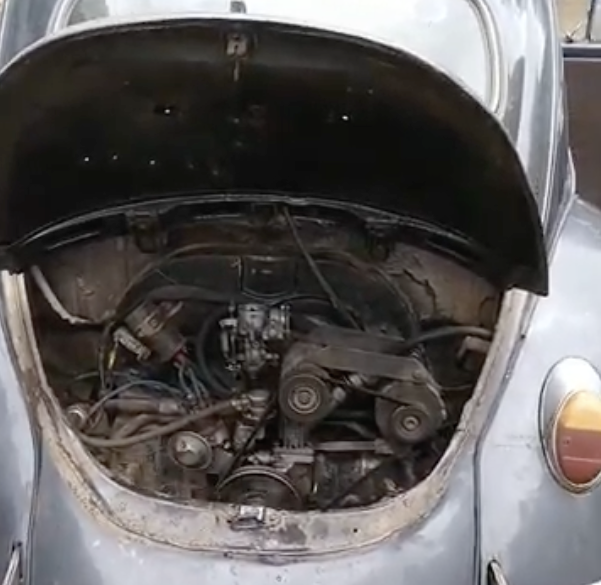
After stopping in the middle of the road, some enterprising onlookers helped me lift the gas tank out and I saw that one of the bolts attaching the steering column to the drive shaft wheel had sheared away. Some small amount of slippage had, over the course of the last half- century or so, worn down the bolt until it could hold no more.
One of the onlookers called his cousin, a taxi driver, who showed up 10 minutes later with a grimy grain sack full of nuts, bolts, gaskets, and other parts whose functions I could only guess. To my shock, he quickly found a bolt that fit Victoria. We reattached the steering column, and I was on my way.
The concept of slippage has stuck with me. Systems rarely fail all at once. With Victoria’s steering column (and later the fuel hose, alternator belt, and brakes) a small looseness of fit caused friction that compounded over time. An imperfect match between parts, a little rust, or a small gap may not matter much at first but can cause damage in the long-run.
Hemingway described going bankrupt as happening "gradually, then suddenly." Organizational decline can work the same way. Rarely is there a single dramatic rupture, but more often failure occurs as the result of accumulated misalignments.
These issues tend to fall into two categories. The first is structural: the visible hardware of an organization. These are the things you can draw on a whiteboard, see in org charts, and find in job descriptions. Roles are duplicated, reporting lines are crossed, systems aren’t fit for purpose, and decision rights are misplaced or ambiguous. The test for structural slippage is whether you could fix it with a reorganization, a new position, different system, or a clearer mandate?
The second kind of misalignment is cultural, so it can be harder to see. Culture is the ‘software’ of the organization: the beliefs, norms, and unwritten rules that influence behavior. Cultural slippage shows up in the gap between stated and lived values, between what communication is supposed to look like and how it happens, in clashing expectations and value differences. We often feel cultural slippage as social discomfort. It can seem personal, experienced as frustration, distrust, or low-grade exhaustion caused by working with people playing a different game.
We can work against the grain for a while against both structural and cultural issues. Teams can push through friction in short bursts. But the longer this continues, the more it costs. Eventually, the steering wheel might stop working without warning.
Actions
As leaders, it is critical to stay attuned to areas of Slippage. Where are the pieces not working together? The first question worth sitting with is: what is the acceptable margin for error? Engineers think carefully about “tolerable variance” when building machines — an F1 car and a commercial airliner have almost none. Victoria, clearly, was operating on generous tolerances. Most organizations sit somewhere in between, but leaders don't often take time to attend to which systems need to be closely tuned. Many people rely on their intuition rather than proactively assessing. Knowing the margin matters, because it will determine how urgently a given misalignment needs attention. Do you care about culture or structural fit more? Is, for example, a communication style difference more critical than a difference in core values?
From there, the work is to name the places where things don't quite fit — and then to check them regularly rather than waiting for the screeching noise or bad smell.This sounds obvious, but slippage is easy to normalize. The gap becomes the new baseline. Someone compensates quietly. The system adapts around the fault –until it can't.
When slippage is found, the question is how to fix the issue: swapping out a part, adjusting how pieces are aligned, or sometimes accepting that a certain amount of variance is the cost of running this particular machine. Not every bolt can be replaced. But some functions are essential (like steering). And the decision should be made consciously, not by default.
This raises the underlying question: where are your system’s sensors? Pilots do walk-throughs before every flight. Modern cars have ‘check-engine’ lights wired to dozens of sensors throughout the engine. Victoria had neither — but she had noises and smells if I was paying attention. A pre-mortem exercise can serve this function for teams by making potential failures visible before they arrive, so you're not learning about the steering column on the side of a mountain. Candid and reflective conversations with team members about what is/is not working will go a long way. Regular pre-emptive maintenance with Victoria saved more than it cost.
Reflection Questions:
Where in your organization do you sense slippage?
Is there an area where you might be lacking critical sensors?
Think of a recent conflict. Could this be traced back to a cultural or structural misalignment?

Victoria can still pull her weight!